Electric marine deployment starts with the right operating problem.
Resort transfers, excursions, island connections and passenger routes can all become candidates for electric vessels — but only when the route, speed, utilisation and charging opportunity support the case.
The use case creates the opportunity. The route determines whether it is viable.
Where should electric be considered first?
Not every vessel in these categories should be electric.
The route matters more than the vessel category.
A resort boat, dive vessel or passenger ferry can all become viable electric candidates. What matters is whether the operating pattern creates a realistic technical and commercial case.
How far does the vessel actually need to travel?
One-way distance, round-trip distance and reserve requirements influence the energy needed for every duty cycle.
How quickly must the journey be completed?
Higher speed can increase energy demand dramatically, so journey-time expectations need to be understood early.
How often does the vessel move?
Repeated daily operation can strengthen the economic case because operating savings accumulate with utilisation.
Where can useful charging happen?
The vessel needs practical access to shore power and sufficient time between duties for the charging strategy to work.
Does the operating pattern give electric a credible reason to continue?
If yes, ZEEV can move into deeper energy, vessel, charging and economic analysis.
Start Route Screening →Different operations. Different reasons to go electric.
The strongest opportunity depends on how the vessel is actually used. These are operating environments where route-led assessment can reveal credible electric marine projects.
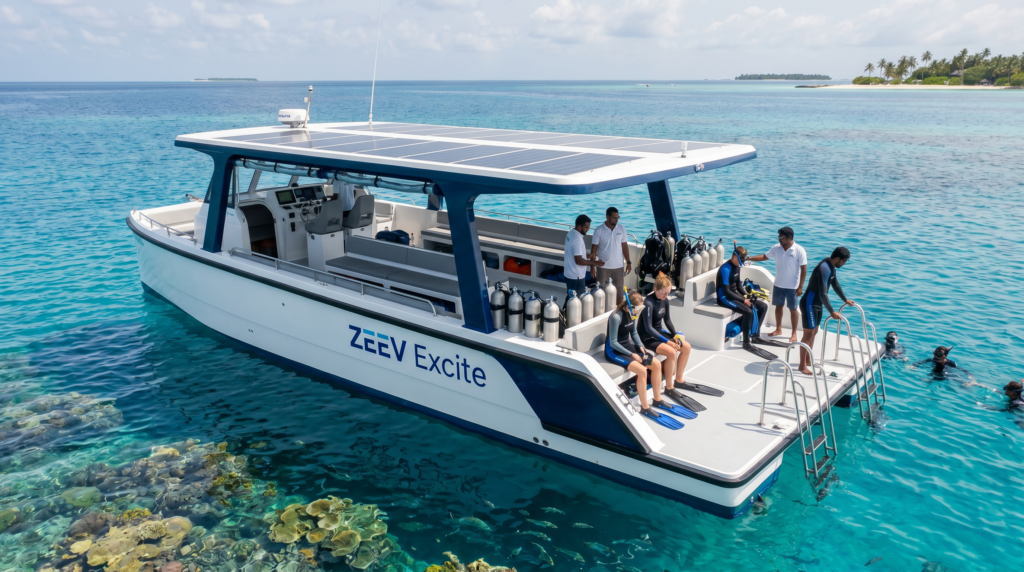
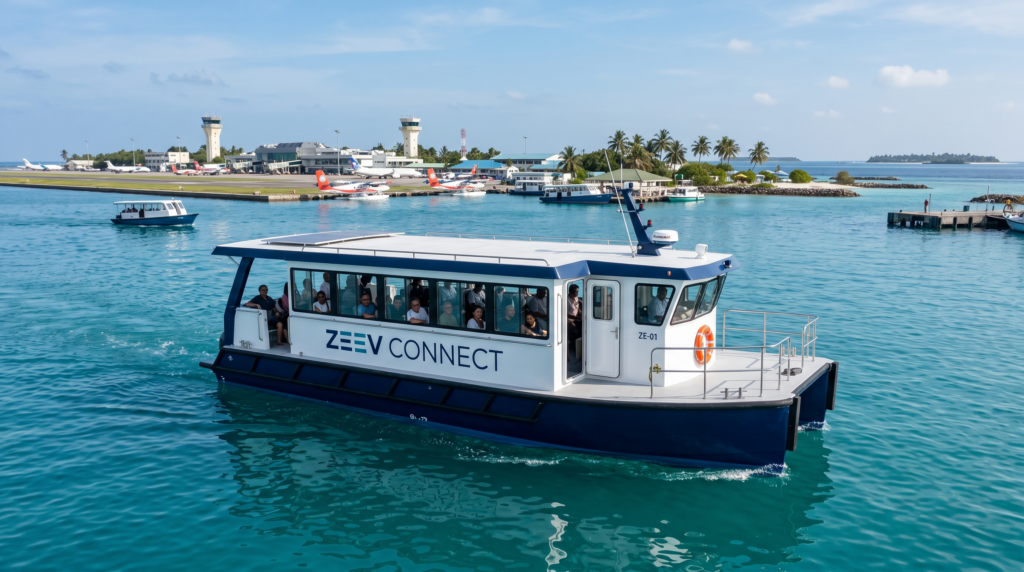
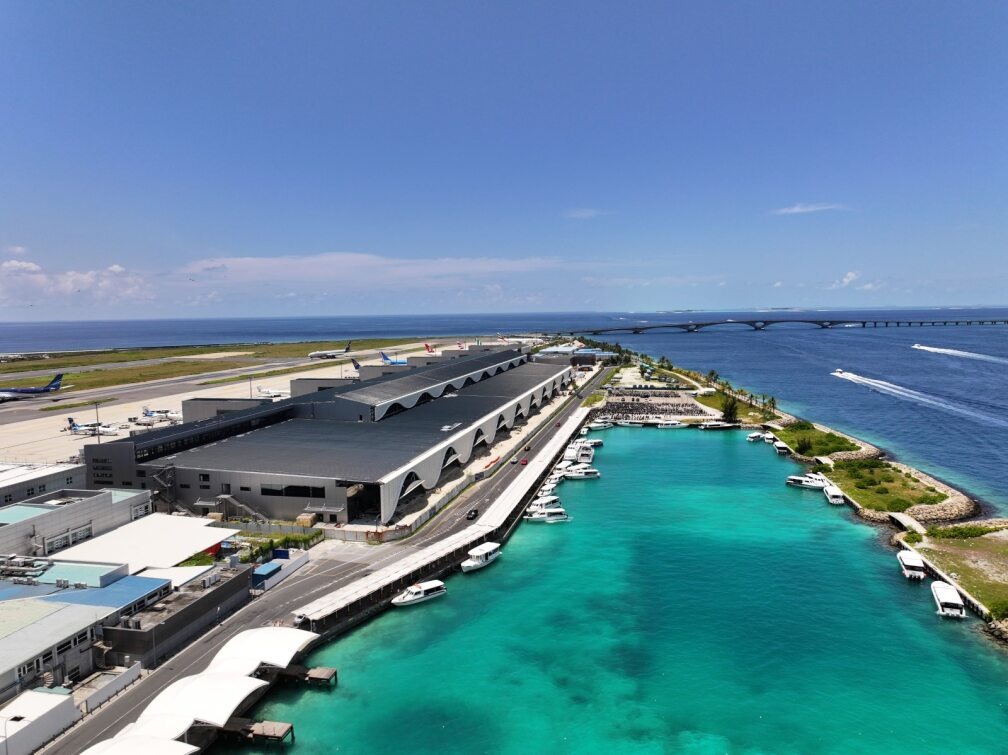
Guest transfers, lagoon mobility and service movement.
Resort operations often begin and end at a known base, creating repeated routes that can be assessed around real schedules and charging opportunities.
Repeated leisure routes from a defined operating base.
Dive, snorkelling and excursion vessels can combine predictable duty cycles with long periods back at the resort or marina between operating windows.
Defined passenger routes with clear journey requirements.
Airport transfers and island connections can be attractive because origin, destination and schedule are known — but speed expectations can become the critical constraint.
High-utilisation routes where operating economics matter every day.
Repeated passenger movement can create meaningful operating-cost advantages, provided battery capacity, charging and timetable reliability remain practical.
Two vessels doing similar jobs can have completely different electric cases.
Route distance, speed, utilisation, payload and charging opportunity determine whether the use case becomes a deployable project.
Start with the easiest useful operating problem to prove.
The first electric marine project does not need to be the most ambitious route. A controlled, repeatable operation can provide better evidence and a clearer pathway to scale.
Known origin. Known destination.
Defined routes make distance, schedule and charging easier to understand.
Useful movement that happens every day.
Regular utilisation gives technical performance and operating economics something meaningful to prove.
Solve a real marine problem first.
The strongest pilot replaces or improves an existing operational requirement rather than creating a demonstration for its own sake.
Choose the first route because it is practical to prove — not because the vessel will attract the most attention.
Bring ZEEV your operating routes. We can help identify which one deserves assessment first.
Start Route Assessment →Have an operation that could be a strong electric candidate?
Tell ZEEV what the vessel needs to do. We can begin with approximate operating information and determine whether the route deserves deeper technical and commercial assessment.
The objective is not to electrify every use case. It is to identify the ones worth pursuing.
Give us the operating problem first.
Distance, speed, daily trips and charging information are useful — but you do not need every answer before contacting ZEEV.