A viable route still needs a pathway to deployment.
Once the operating case is credible, ZEEV helps connect vessel requirements, project economics, financing structure, construction and commissioning into a practical deployment pathway.
Finance should support a proven operating case — not compensate for a weak one.
Deployment depends on several decisions reaching the same conclusion.
Keeps the commercial and deployment pathway connected to the route.
Capital should follow a credible operating case.
Finance becomes useful only after the project can explain what the vessel must do, what it is expected to cost, how it will operate and where the economic value comes from.
Define the job before the asset.
Route, speed, payload, utilisation and charging opportunity establish the operating problem that the investment is expected to solve.
Understand where the value comes from.
Vessel cost, energy use, maintenance, utilisation and operating savings help determine whether the project has a defensible commercial case.
Make the project understandable to capital.
Financiers need a clear asset, customer requirement, payment logic, project timeline and risk structure before funding can become credible.
A financing structure can improve a good project. It cannot rescue a weak route.
ZEEV tests the operating and economic case before the project is pushed toward capital, leasing or another commercial structure.
Explore Route Economics →The vessel does not always have to be funded the same way.
Once the operating and economic case is credible, the appropriate ownership and financing structure depends on the customer, asset, project risk and available capital.
Customer-funded asset.
The operator, resort or route owner purchases the vessel and associated infrastructure directly and retains ownership of the asset.
Finance the vessel over time.
Leasing or asset-finance structures can reduce the need for full upfront capital where a financier is comfortable with the asset, customer and repayment case.
Separate the asset from the operator’s upfront capital.
Depending on project scale and counterparties, ownership, investment and operating responsibilities can potentially be structured across different parties.
The objective is not to force the route into a financing product.
ZEEV can help develop the project case and coordinate discussions around appropriate commercial structures. Final funding availability, terms and approvals remain subject to the relevant financier, investor and project counterparties.
Deployment begins when the decisions start moving together.
A credible project still has to pass through specification, commercial approval, construction, infrastructure readiness, commissioning and launch. The value of coordination is keeping those stages aligned.
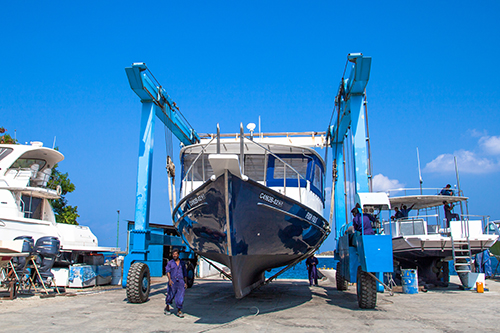
Construction, technical integration, infrastructure readiness and commissioning must reach the same operational deadline.
Lock the operating and commercial case.
Confirm the route requirement, vessel role, technical assumptions, economics and preferred commercial structure before major commitments are made.
Turn the requirement into a buildable vessel specification.
Hull platform, propulsion, batteries, onboard systems, charging requirements and operating layout are brought into one coordinated technical scope.
Construct the vessel while the operating base gets ready.
Boatbuilding, system integration, shore power, charging access and project logistics need to progress against the same deployment timetable.
Prove the vessel in the environment it was designed for.
Testing, commissioning, handover and early operational monitoring confirm that the complete system performs against the real marine requirement.
The vessel, charging site and commercial structure should be ready for the same launch date.
ZEEV helps keep the project pathway connected so technical, financial and operational decisions do not drift apart between assessment and launch.
Keep the route, capital and deployment plan connected.
ZEEV helps move credible electric marine opportunities from operating requirement into a coordinated project pathway — connecting economics, vessel capability, commercial structure and practical deployment.
The goal is not to finance a vessel. It is to create a project worth financing and capable of operating.
Bring ZEEV the route first.
You do not need a complete vessel specification or financing plan. Tell us what the vessel needs to do and we can identify what the project needs next.